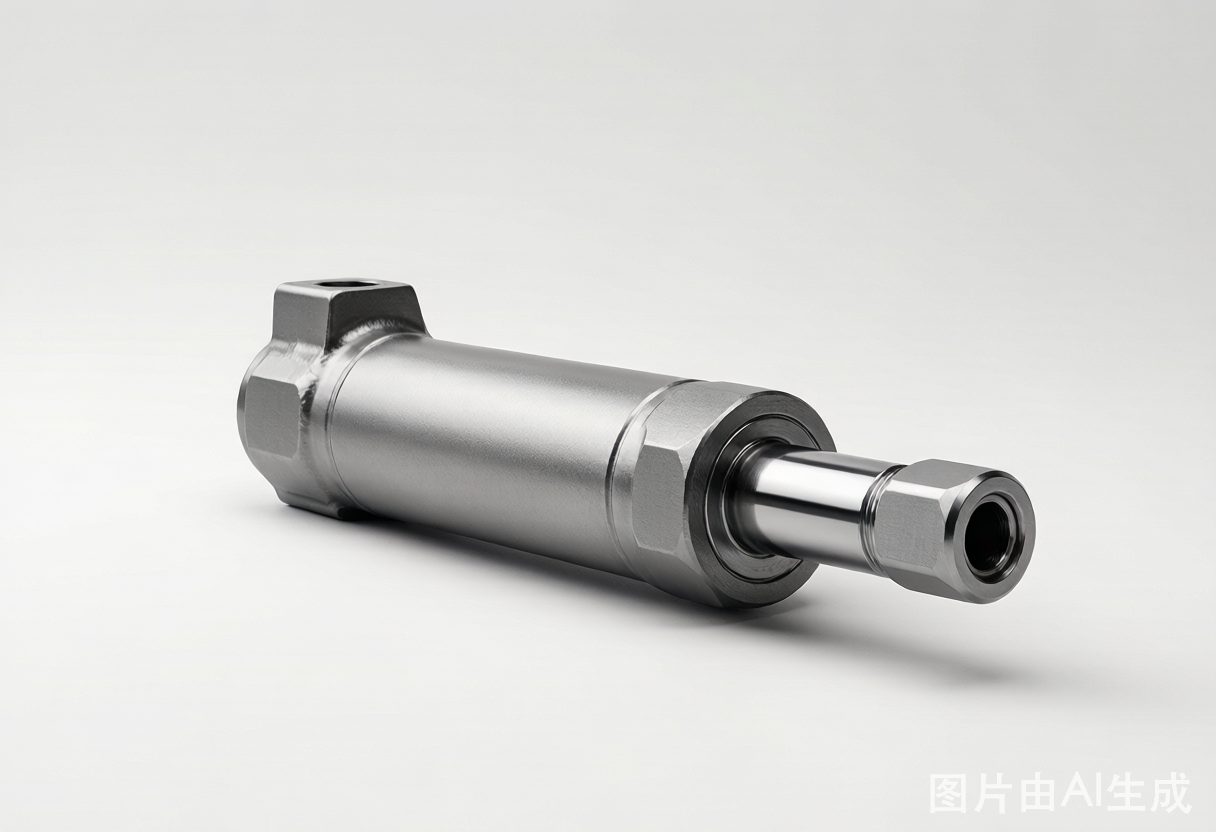
TL;DR: Roughly 70% of hydraulic failures trace back to contaminated oil, not to the cylinder or valve that finally dies. A tractor working in dust kicks up abrasive particles that score a chrome rod, then grind a piston seal, then scar a valve spool — all from oil that was never clean. One oil sample, read against the ISO 4406 scale, tells you more than any gauge. Fix the oil first and the cylinder problem usually disappears with it.
A farmer I worked with replaced the same loader lift cylinder twice in one season and blamed the cylinder both times. The third rod came back scored in under 200 hours. We pulled an oil sample instead of sending another cylinder: it read two grades dirtier than the machine's target, with wear metal that traced straight back to the pump. The cylinder was the victim, not the cause.
That is the pattern I see every harvest. Contamination is a slow, compounding failure that gets blamed on the part that finally breaks. The fix is cheap and the diagnosis is not hard once you know the three numbers to look at.
Why agricultural oil gets dirty faster
Agricultural hydraulics run in conditions no factory system faces. A combine header runs in a cloud of chaff and fine silica. A tractor three-point hitch gets buried in soil dust, then washed with water at the pressure washer — and the water finds a way past a worn wiper seal into the oil. Open the filler cap in a field on a dry day and you have introduced the abrasive that will finish the job months later.
There are three sources, and they behave differently. Ingressed dirt from outside is the classic one. Internally generated wear metal from the pump and valves is the second — and it is self-reinforcing, because wear makes more particles which make more wear. Maintenance-introduced debris is the third: new oil straight from a drum, rags, and a hose change done in a hurry. Most systems have all three.
Water deserves its own mention. Free water strips the oil film and rusts ferrous surfaces while the machine sits. Dissolved water cuts lubricity and, past about 0.1% in a biodegradable ester fluid, starts hydrolysing the oil itself. A hazy or milky oil sample is water, and it needs action, not a top-up.
Reading the ISO 4406 cleanliness grade
ISO 4406 reports oil cleanliness as three numbers — for example 18/16/13 — that count particles bigger than 4, 6 and 14 microns in each millilitre. The higher the number, the dirtier the oil, and each step up roughly doubles the particle count. So 18/16/13 means about 1300 to 2500 particles of 4 microns and up, and 40 to 80 of 14 microns and up.
What grade you need depends on the tightest component in the circuit. A simple gear-pump and spool-valve tractor can live with 19/16 or 20/17. A system with a piston pump or a proportional valve wants 18/16/13 or better. A servo system would demand 17/15/12, but you will not find one on a farm tractor.
The trap is assuming new oil is clean oil. Oil from the drum commonly arrives around 20/18/15, which is dirtier than the machine's target. Pre-filter it through a portable filter cart on the way in, every time, or you are pouring the problem straight into the reservoir.
| Component | Typical ISO 4406 target | Why it matters |
|---|---|---|
| Gear pump + spool valves (basic tractor) | 19/16 to 20/17 | Loose clearances tolerate moderate contamination |
| Piston pump + proportional valves | 18/16/13 | Tighter running clearances score under abrasive wear |
| High-pressure precision circuits | 17/15/12 | Small orifices clog and spools stick below this |
| New oil straight from the drum | ~20/18/15 | Dirtier than most targets — pre-filter before filling |
The grades above are the ranges published in filtration and fluid-cleanliness literature and match common maintenance guidance. Confirm the exact target against your machine's own manual, because one brand's loader can demand a grade tighter than the next.
The filter: beta ratio, not just microns
A micron rating on a filter tells you the theoretical pore size. It does not tell you how well the filter actually catches particles, and that is the number that decides whether your oil holds grade. The figure that does is the beta ratio, from the ISO 16889 multi-pass test.
Beta is a ratio of particles upstream to particles downstream. Beta 10 of 200 means that for every 200 particles of 10 microns and up that reach the filter, one gets through — 99.5% efficiency. A filter with no beta figure is a nominal filter, and it will not hold a target ISO grade no matter what micron number is printed on the side. Spec beta 200 or higher on the return filter that does the real work.
- Beta 75 — about 98.7% efficient, the industrial baseline for a return filter.
- Beta 200 — 99.5% efficient, the sensible minimum for a critical filter.
- Beta 1000 — 99.9% efficient, for precision or servo circuits.
Watch the differential pressure across the filter too. A rising pressure drop is the filter doing its job and filling up; a bypass indicator that has tripped means unfiltered oil has been circulating. Change on schedule, and change after any hydraulic repair that opened a line, because that repair is exactly when contamination sneaks in.
What contaminated oil does to a cylinder
The cylinder is where contamination announces itself, even when the particle came from the pump. Hard particles embed in the soft rod seal, then lap the chrome rod like a hone every time it strokes. The rod dulls and scores, the wiper tears, and now the seal leaks — so the operator replaces the seal, and the new one scores within hours against the already-damaged rod.
Inside the cylinder, the same particles score the bore and the piston wear rings. Internal leakage climbs, the cylinder runs hot, and lift capacity drops while pressure still reads normal. A slow, weak cylinder that still builds pressure is the classic signature of internal bypass from wear, not a pump fault.
The maintenance that stops this is mechanical, not clever. Wipe the rod before it retracts on a dusty job. Check the wiper and the rod for nicks at the start of the season. Sample the oil when the drain interval comes, not when the machine stops. None of it is expensive; all of it is cheaper than a cylinder.
Building the sampling habit
Sample the oil from a live return line or a sampling valve, never from the bottom of a settled reservoir, and never from a cold machine. Take the sample at operating temperature while the system is running, and send it or run it through a particle counter that reports the ISO 4406 grade, water content and wear metals.
Trend the result. A single clean sample is nice, but the trend is what catches a problem early — a grade that climbs between changes means the filter is undersized, the source is still open, or a component is generating metal. A sudden jump after a hose change points at the change itself. Oil analysis is not a one-off; it is a baseline you build.
Pair it with the calendar. On a seasonal machine doing 500 hours a season, change the oil before it sits for winter, not after, so the cylinder bore does not sit all winter in degraded oil. That single habit keeps the next spring's first start from turning into a scored rod and a torn seal.
How HCIC approaches a contamination failure
HCIC has built agricultural hydraulics since 1998, from three plants and one R&D centre with 20+ engineers, producing 210,000 units a year with 95% exported. When a cylinder comes back scored, we ask for the oil sample first, because a clean rebuild into a dirty system is a repeat failure waiting to happen.
Every cylinder we ship leaves with a full maintenance kit — seals, wipers and filters — and an 18-month warranty from dispatch. If the fault is upstream, we point at the pump or motor or the directional valve instead of selling you a cylinder you do not need. Send your bore, stroke, mounting and the oil sample result to davidsong@mail.huachen.cc and the quote lands within 48 hours, sample orders from one piece.
For the refuse side of the business, our sister site covers seal rebuild versus replacement on refuse truck cylinders — the same contamination logic applied to a heavier, higher-cycle machine.
Frequently asked questions
What ISO 4406 cleanliness grade should agricultural hydraulic oil meet?
Most agricultural systems run well at ISO 18/16/13, tightening to 16/14/11 where proportional valves or piston pumps are fitted. New oil straight from the drum is often only 20/18/15, so pre-filter it before filling rather than trusting the label.
How do I tell if hydraulic oil contamination is damaging my cylinders?
Watch for scored or dulled rods, sticky valve spools, rising oil temperature and a slow cylinder that still builds pressure. The clearest signal is an oil sample: a cleanliness grade that keeps climbing between changes means the filter is undersized or the source is still open.
What beta ratio should a hydraulic return filter have?
Specify beta 200 or higher on the critical filter, meaning only one particle in 200 passes. A nominal filter with no beta figure will not hold the target ISO grade, no matter what micron rating is printed on it.
Does HCIC supply maintenance kits for agricultural hydraulic cylinders?
Yes. Every cylinder ships with a full maintenance kit including seals, wipers and filters, backed by an 18-month warranty from dispatch. Email davidsong@mail.huachen.cc with your bore, stroke and mounting details and we quote within 48 hours, sample orders from one piece.