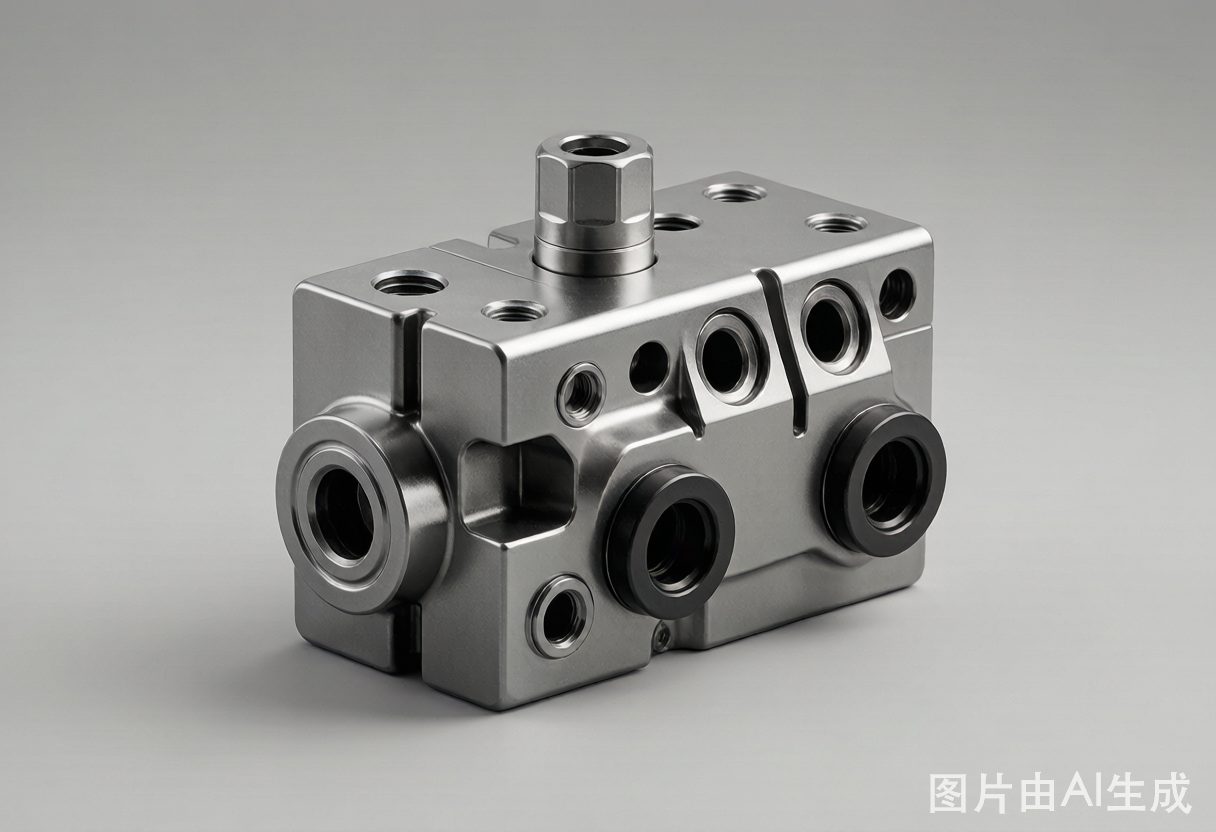
TL;DR: Load sensing saves fuel by letting the pump produce only the flow each function demands, holding a constant pressure differential across the valve. Flow sharing keeps multiple functions moving smoothly and at proportional speed when pump flow runs out. They solve different problems — and modern agricultural valve sections, including HCIC's monoblock and sectional valves, increasingly combine both.
A load-sensing valve is a hydraulic control valve that measures the highest load pressure in the circuit and signals the pump to deliver just enough flow at just enough pressure — no more. Flow sharing (also called flow sharing or anti-saturation) is a valve function that proportionally divides available pump flow among all active functions when demand exceeds supply, so no function stalls and every function keeps moving.
How load sensing works
Load sensing holds a constant pressure differential (Δp) across each metering orifice, typically 10–25 bar. A load-sense line feeds the highest load pressure back to the pump compensator:
- At standby, the pump idles at low pressure — consuming minimal power.
- When a function activates, the pump raises pressure to load pressure + Δp, producing exactly the flow the orifice passes.
- Because pressure is matched to load rather than held at relief level, fuel savings of 15–30% are typical in part-load field work.
The result: on a tractor operating a front loader, a planter and steering simultaneously, each function receives the flow its lever commands — no excess, no waste heat.
How flow sharing works
Flow sharing matters when total demand exceeds pump supply — a condition called saturation. Without it, the function closest to the pump (usually lowest pressure drop) hogs the flow and the rest stall. A flow-sharing valve measures total demand and divides the available flow proportionally:
- All active functions continue moving — slower, but never stalled.
- Speed relationships between functions stay proportional, which matters for combined boom raise + fold operations.
- The operator never has to sequence functions manually to avoid stalling.
Load sensing vs flow sharing: what each solves
| Attribute | Load Sensing | Flow Sharing |
|---|---|---|
| Primary benefit | Energy efficiency — pump makes only the flow demanded | Anti-saturation — all functions keep moving under supply shortage |
| Mechanism | Constant Δp across metering orifice; load signal to pump compensator | Proportional division of available flow among active functions |
| Best for | Part-load work, mixed implement operations, fuel-sensitive fleets | Simultaneous multi-function work (boom + steering + planter) |
| Limitation | Does not prevent stall when pump flow runs out | Does not by itself save energy |
| Typical pairing | Combined in modern sectional valves — load-sensing pump + flow-sharing sections | |
Which do you need on the farm?
If your machines run long part-load hours — boom spraying, mowing, light loader work — load sensing pays back through fuel savings alone. If your operators routinely combine functions (folding a boom while steering and running a filler pump), flow sharing prevents the stalls and speed surges that damage produce and frustrate operators. Most modern tractors and self-propelled machines benefit from both: a load-sensing pump upstream of flow-sharing valve sections.
When specifying a replacement or custom valve block, confirm whether your pump is load-sensing capable (a load-sense line and compensator), because a flow-sharing valve without a load-sensing pump still suffers efficiency losses at part load. HCIC's engineers review your circuit diagram and flow budget before recommending a directional sectional valve configuration or a custom valve block.
Specifying valves with HCIC
HCIC manufactures monoblock and sectional directional valves for 40–200 L/min agricultural circuits, manually or joystick-actuated, with load-sensing and flow-sharing options. Every valve ships with a test report, and every inquiry receives a quote within 48 hours. To match a valve to your pump and implements, start with our pumps and motors range, read our guide on choosing an agricultural hydraulic cylinder, or send your circuit diagram through the contact page — MOQ is one piece, so prototypes and fleet spares are equally welcome.
Frequently asked questions
Can a valve be both load sensing and flow sharing?
Yes — and high-performance agricultural sections increasingly combine them. Load sensing governs the pump's output; flow sharing governs the division of that output among sections. Together they deliver efficiency at part load and proportionality at saturation.
Does load sensing require a special pump?
It requires a pump with a load-sensing compensator and a load-sense signal line — typically a variable displacement axial piston pump. Gear pumps can be used with upstream pressure compensators, but the efficiency benefit is smaller.
Will flow sharing slow my functions down?
Only when demand exceeds supply — exactly when something would otherwise stall. Under normal conditions, flow has no effect on speed because there is enough flow for every function; speeds match a non-sharing valve.
Can HCIC replace a Danfoss or Bosch Rexroth valve section?
Yes. HCIC builds monoblock and sectional valves to your flow range (40–200 L/min) and actuation preference, with a 48-hour quote commitment, an 18-month warranty and MOQ of one piece. Send the datasheet or the old section's nameplate through the contact page and our engineers will confirm interchangeability.