TL;DR: When a self-propelled sprayer or harvester loses drive on one side, the operator's first instinct is to blame the wheel motor. Often the motor is fine and the real fault is a weak pump, a relief valve that will not hold, or a case drain line that has been plumbed wrong. Read the case drain flow and the system pressure under load before ordering a replacement — they separate a worn motor from everything else in about twenty minutes.
A grower I worked with ran a self-propelled sprayer that would creep fine on flat ground and then fall flat on the first headland slope. He had already priced a new wheel motor. We asked him to do two checks first, and the motor never came off the machine. That call is why I write this down every season: a wheel motor is a rotary actuator, and like any rotary unit it fails in a predictable order — leakage first, then noise, then seizure.
The logic is simple. A wheel motor turns pressure into torque at the wheel. If torque falls but pressure at the motor is normal, oil is bypassing inside the motor. If pressure falls too, the problem is upstream. One gauge, one graduated container, and you know which side of the coupling is at fault.
How a wheel motor makes torque
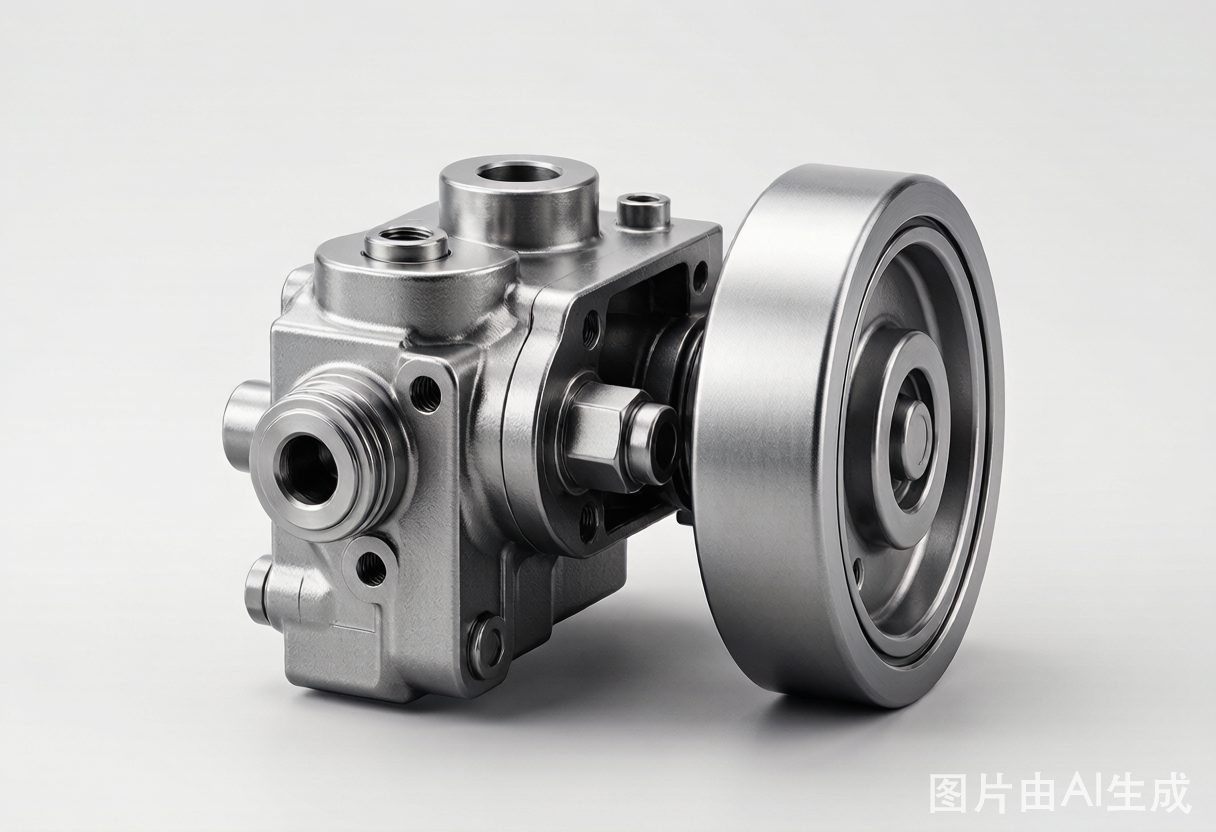
A hydraulic wheel motor converts flow and pressure into low-speed, high-torque rotation. Pressurized oil enters the motor and pushes on pistons or a gerotor gear set, and the shaft turns the wheel through a flange that sits close to the hub. On a self-propelled sprayer the motor is often mounted directly into the wheel rim, so the load rides on the motor's own bearings.
Two designs cover most agricultural drives. Orbital (gerotor) motors are compact and cheap, good to about 310 bar, and show up on lighter sprayers and seeders. Radial piston motors run to 470 bar and handle the continuous load of a heavy harvester or forage machine. They wear differently, so the failure signature is not the same.
HCIC's agricultural range spans wheel motors from 200 to 1000 cc at 250 to 400 bar, which covers the low-speed high-torque drives on self-propelled sprayers, harvesters and forage harvesters. A 200 cc motor is a light sprayer drive; a 1000 cc unit is a heavy final drive on a combine.
The first test: case drain flow
Every motor has a case drain port that vents internal leakage back to tank. That drain is the motor's confession. On a healthy motor the drain flow runs about 3 to 5 percent of input flow — a small, steady trickle. When a valve plate, piston or gerotor wears, the bypass grows, and the drain flow climbs with it.
Collect the drain line in a graduated container for a measured interval, at operating temperature and under load, and compare against the motor's rated input flow. A drain flow that has doubled or tripled from the baseline is internal leakage, and it explains exactly why the machine still moves but will not hold the slope.
The second test: pressure under load
Run the motor against a stalled or near-stalled load and read system pressure at the motor inlet. Two outcomes, two different fixes.
- Pressure is low — the pump is worn, the relief valve is leaking, or a directional valve is bypassing. The motor is probably innocent.
- Pressure is normal but speed and torque are still down — the motor is bypassing internally, and the drain flow will confirm it.
This is the single highest-value check for a weak drive, because it stops you replacing the wrong component. A motor and a pump fail to the same symptom, and only the gauge separates them.
The third test: noise and temperature
Noise is the second failure signature. A sharp whine that changes with speed usually means air in the oil or a clogged suction filter starving the inlet. A periodic knock is a bearing, a sticking piston, or a worn valve plate — and it is a different sound again from a gear motor with pitted teeth. Learn which noise is which before you open anything.
Heat is the third. A wheel motor that runs hot is either over its duty cycle or leaking internally, and both cook the seals. Watch the case drain back-pressure too: keep it under about 1.7 bar, because high case pressure forces oil outward and can blow the shaft seal in minutes. Route the drain straight to tank, unrestricted, and never share it with a return line carrying flow.
| Symptom | Most likely cause | First check | Reference |
|---|---|---|---|
| Weak drive, drops under load | Internal leakage in the motor | Case drain flow vs 3–5% of input | High drain = worn valve plate / pistons |
| Low pressure at inlet | Worn pump or leaking relief valve | Pressure at stalled load | Motor likely fine |
| Sharp whine with speed | Air ingress or starved inlet | Oil level, suction filter | Check for foamed oil |
| Periodic knock | Bearing or piston wear | Vibration, gear oil in final drive | Separate motor noise from final drive |
| Housing hot to touch | Overload or internal friction | Return oil temp, duty cycle | Above ~80 °C is abnormal |
The 3–5 percent case drain figure is the rule of thumb published by motor rebuilders, and the 1.7 bar case-pressure limit matches the guidance from hydrostatic repair shops. The 80 °C housing threshold is a common field limit in hydraulic motor maintenance literature. Confirm exact limits against your motor's own data sheet before you act.
Why contamination decides most of these failures
Across the industry, contamination is blamed for the large majority of hydraulic failures — repair shops routinely cite figures around 70 to 80 percent. A wheel motor has tight running clearances, and one load of dirty oil can score a valve plate or a gerotor set that then leaks from the first hour. Cleanliness is not a suggestion on these drives.
Hold the oil to a reasonable cleanliness grade, change filters on schedule, and sample the oil when the drain flow starts to climb. On a motor with a case drain, the drain is also a diagnostic port: a sudden jump in drain flow after a filter change or a hose repair usually means contamination got in during the work.
Specifying a replacement wheel motor
When the motor really is finished, the fastest path to a drop-in replacement is the numbers, not the model code alone. Send the displacement in cc, the flange and shaft type, the port sizes and thread form, the case drain size, and the working and peak pressure. Photos of the motor in the wheel, close on the flange and both ports, catch any mounting geometry a code would miss.
Give the machine make, model and serial number too. Some motors are shared across a platform, and a cross-reference can turn a discontinued OEM part into an off-the-shelf build. If the code is gone, the measurements are enough.
How HCIC approaches a weak wheel drive
HCIC has built agricultural hydraulics since 1998, from three plants and one R&D centre with 20+ engineers, producing 210,000 units a year with 95% exported. A weak wheel drive is a diagnosis before it is a parts order, so we start with the drain flow and the pressure reading, not with a quote for a motor you may not need.
If the test points at the pump or the directional valve, we say so and quote that instead. If it points at the motor, we supply a replacement wheel motor in the 200 to 1000 cc range and ship it with an 18-month warranty. Either way the reply lands within 48 hours, and sample orders start at one piece. If your whole drive train needs rethinking, our custom hydraulic systems team will spec the pump, motor and valve block as one matched set.
For a different branch of the business, our sister site covers telescopic dump and tipper cylinders — useful if the machine losing drive is a trailer behind a tractor rather than a self-propelled drive.
Frequently asked questions
Why does my self-propelled sprayer lose drive on one side or slow down under load?
A wheel motor that creeps or loses torque under load usually points to internal leakage rather than a pump fault. Measure case drain flow first: on a healthy motor it runs about 3 to 5 percent of input flow. If it is well above that, the valve plate, pistons or gerotor are bypassing internally and the motor needs a rebuild or replacement.
How do I tell a worn wheel motor from a weak hydraulic pump?
Load the motor against a stalled or near-stalled condition and read system pressure. If pressure is low, the pump or relief valve is the likely fault. If pressure is normal but speed and torque are still down, the motor is bypassing internally and its case drain flow will be high.
What case drain back-pressure is safe for a wheel motor?
Keep case drain back-pressure low, ideally under about 1.7 bar (roughly 25 psi). High case pressure forces oil outward and can blow the shaft seal within minutes, so route the case drain line directly back to tank without restrictions and never share it with a return line carrying flow.
What displacement range does HCIC offer for agricultural wheel motors?
HCIC supplies wheel motors from 200 to 1000 cc, with operating pressures from 250 to 400 bar, covering low-speed high-torque drives on self-propelled sprayers, harvesters and forage machines. Send the motor's displacement, flange, shaft, port and case drain details and we quote within 48 hours, sample orders from 1 piece.