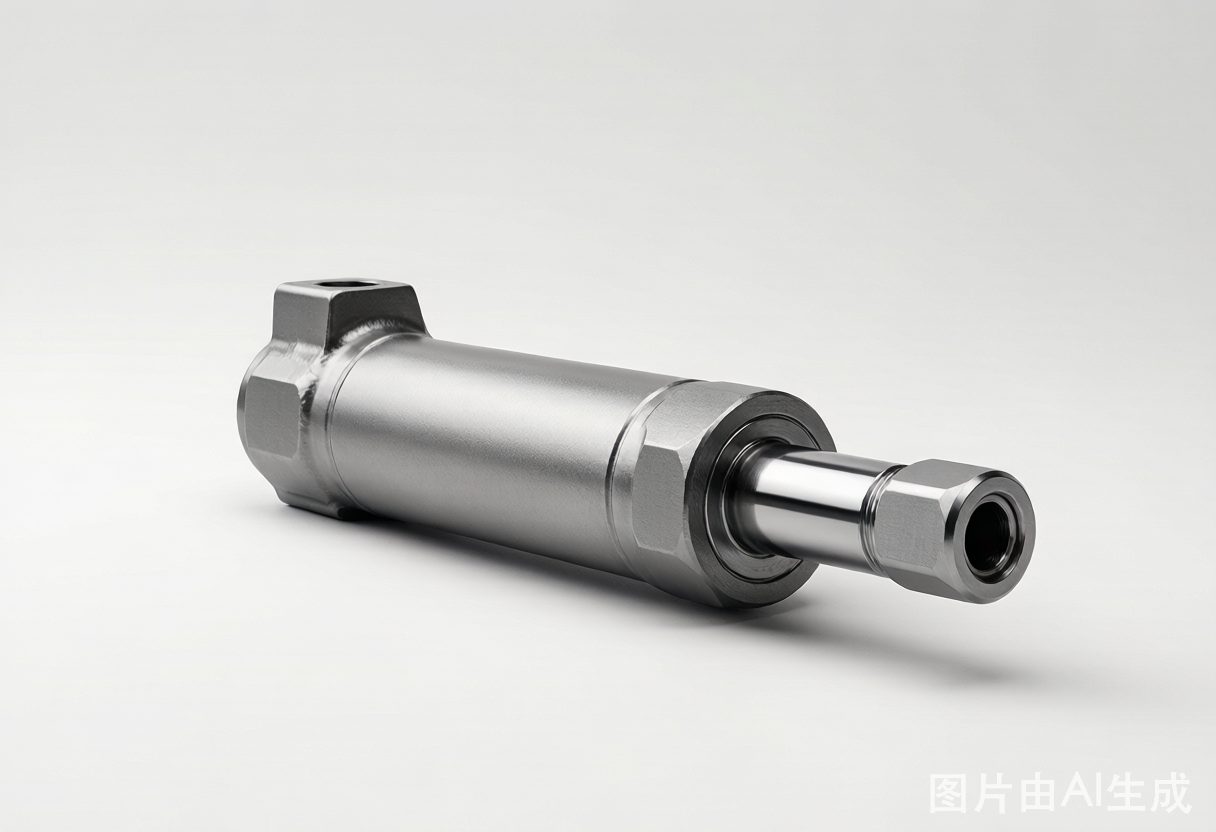
TL;DR: A Danfoss Hydro-Line alternative is a replacement hydraulic cylinder built to match the original unit's mounting dimensions, bore, stroke, port standard and pressure class, so it drops into the same position on your machine without machining or hose changes. Agricultural OEMs and repair shops source alternatives when OEM lead times, prices or series discontinuations put machines at risk. HCIC manufactures cylinders benchmarked against Danfoss Hydro-Line and Bosch Rexroth hardware — matched from your nameplate, drawing or sample, quoted within 48 hours, minimum order one piece, with a test report and 18-month warranty on every order.
Danfoss Hydro-Line cylinders earned their reputation on heavy-duty industrial and mobile machinery, and a generation of harvesters, forestry machines and material handlers still runs on them every day. But reputations create a sourcing problem: original units carry premium pricing, some series and configurations have long factory lead times, and repair shops servicing mixed fleets cannot always wait. That is when the cross-reference question comes up — can this machine take a matched cylinder from another manufacturer?
The honest answer is yes, provided the cross-reference is done per unit against the actual cylinder, not against a generic catalog page. This guide explains what has to match, why published cross-reference tables do not exist for this class of cylinder, and exactly what to send a supplier to get a fast, accurate quotation.
Where Hydro-Line cylinders appear in agricultural machinery
Hydro-Line hardware shows up across the segments where HCIC also builds — agriculture and maintenance, forestry and logging, and material handling. The typical positions and their cross-reference sensitivity:
| Machine position | Cylinder duty | Cross-reference sensitivity |
|---|---|---|
| Harvester header lift | High-cycle, shock-loaded | High — mount geometry and cushioning affect header response |
| Loader boom and bucket | Peak pressure spikes | High — rod strength and pressure class must match duty |
| Forestry crane booms | Long stroke, side loads | Critical — stability and load-holding evidence required |
| Material handler steering | Constant low-amplitude cycles | Moderate — seal specification dominates life |
| Implement leveling | Mixed duty, dust exposure | High — rod coating and seal compound decide service life |
Positions with shock loads and safety-relevant load holding — loader booms, forestry cranes — deserve the most careful matching, and the strongest test documentation from the replacement supplier.
Why there is no published cross-reference table
Hydraulic cylinders are not filters. A filter has one interface — thread and seal — so a table works. A cylinder has at least seven: mounting style, pin or cleat dimensions, bore, rod diameter, stroke, port standard and position, and cushioning. Industrial cylinder families like Hydro-Line were frequently configured to individual OEM machine drawings, meaning two cylinders with adjacent serial data can differ in mounting or ports. Any static cross-reference table is therefore a claim nobody can stand behind.
The reliable method is per-unit matching, and a manufacturer — not a trader — will run it for you. HCIC's spare-parts program works from three inputs:
- Nameplate data or the stamped series designation — photographed and sent to our engineers, who reconstruct the dimensional specification.
- The OEM machine drawing or the cylinder drawing — the fastest and most precise route, matched directly in the approval drawing.
- The failed cylinder itself, or field measurements — for reverse engineering: pin-to-pin lengths retracted and extended, bore and rod diameters, port size and position, cushion evidence.
From any of the three, HCIC returns a quotation within 48 hours, with an approval drawing for your sign-off before production. If your machine also needs valves or a manifold while the cylinders are out, the same engineering team can quote the valve block or the complete hydraulic system package in the same cycle.
What a drop-in alternative must match
Beyond the obvious bore and stroke, five attributes decide whether a Hydro-Line alternative is genuinely drop-in:
| Attribute | What to verify |
|---|---|
| Mounting style and dimensions | ISO 6020 / 6022 interface or OEM-specific — pin diameters, hole centers, head and cap mounts identical to the original |
| Port standard and position | ISO 6149 metric or SAE — and clocking identical, so existing hose assemblies connect without modification |
| Pressure class | Rated working pressure at or above the machine's relief setting, with proof and burst testing to ISO 10100 |
| Cushioning | End-of-stroke cushion profile matched, or machine timing and operator feel change |
| Seals and rod finish | Seal compound compatible with the machine's fluid; hard-chrome rod suited to dust and crop residue |
HCIC builds to all of them: agricultural and industrial cylinders with bores from 40 to 630 mm, strokes to 12,000 mm and working pressures to 31.5 MPa, designed to ISO 6020 / 6022 / 10100 and manufactured to customer drawings and destination-country requirements. Every order ships with a test report and carries an 18-month warranty; CE marking is not applied, because it belongs to the complete machine, not the cylinder.
Commercial terms and how to start
Replacement sourcing is usually a downtime decision, so the terms matter as much as the engineering:
- Minimum order quantity: one piece — sample and trial orders welcome, so a single-machine repair is never blocked.
- Payment: T/T, 30% deposit with order and 70% balance before shipment; sample orders are prepaid in full.
- Lead time: custom-built cylinders typically 25–45 days from order confirmation; standard configurations ship faster, confirmed at quote.
- Response: every inquiry receives a quotation within 48 hours, including the approval drawing cycle.
Before you send the RFQ, two of our engineering guides will make the conversation faster: how to size a hydraulic cylinder covers the bore and rod math, and agricultural cylinder maintenance shows which failure modes mean replacement rather than repair. For fleet-scale programs, our fleet retrofit program packages cylinders, valves and hoses as one tested system with single-supplier responsibility.
Frequently asked questions
Can HCIC build a direct alternative to a Danfoss Hydro-Line cylinder?
Yes. HCIC manufactures replacement cylinders benchmarked against Danfoss Hydro-Line hardware — matching mounting dimensions, bore, rod, stroke, port standard and pressure class so the unit drops into the original's position without machining. Send the nameplate data, the OEM drawing or the old cylinder, and our engineers confirm the cross-reference in an approval drawing.
Why is there no published Danfoss Hydro-Line cross-reference table?
Hydro-Line configurations vary by series, stroke, mounting and port options, and many were built to specific OEM machine drawings. A static table cannot capture those variants. Per-unit matching against the nameplate or a drawing is the only reliable cross-reference method.
What are HCIC's commercial terms for replacement cylinders?
Minimum order quantity is one piece — sample and trial orders welcome. Payment is T/T with 30% deposit and 70% balance before shipment; sample orders are prepaid in full. Custom-built cylinders typically take 25–45 days; standard items ship faster, confirmed at quote. Every inquiry is quoted within 48 hours and every order ships with a test report and an 18-month warranty.
Do HCIC alternative cylinders carry CE marking?
No. Cylinders are designed to ISO 6020 / 6022 / 10100 and manufactured to customer drawings and destination-country requirements. CE marking applies to complete machines placed on the EU market by the machine manufacturer, not to the replacement cylinder itself; compliance evidence is the ISO 10100 test report supplied with each order.