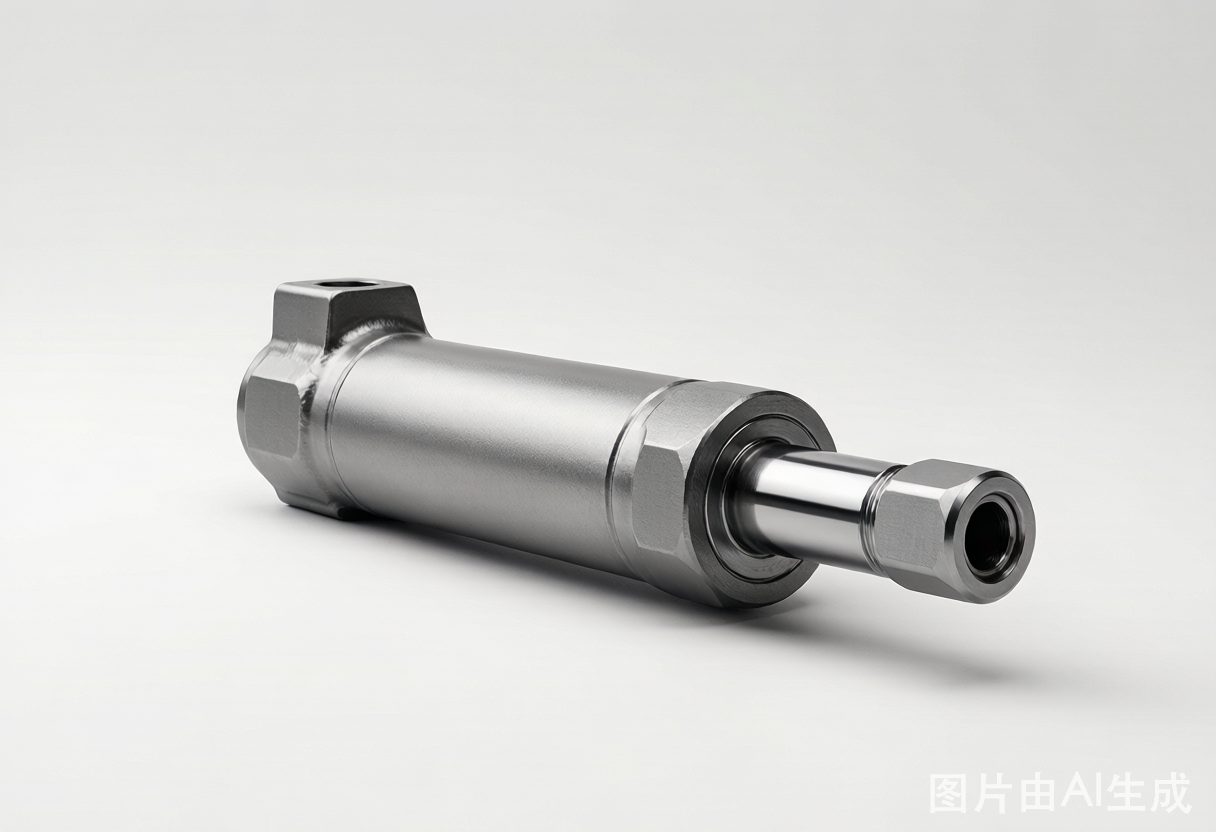
TL;DR: A loader bucket that sinks under load is one of two faults: a piston seal bypassing oil, or a load-hold valve letting it drain. Most operators guess "seals" and reseal a cylinder that was never the problem. Test the valve first, then the barrel, before you spend on a rebuild. The fix is usually a reseal, a new load-hold valve, or a replacement cylinder — and the difference is a ten-minute dead-head test.
A dairy farm in Ireland called last spring with a telehandler that would not hold a bale spike overnight. By morning the headstock had dropped a full metre. They had already paid a local shop to reseal both lift cylinders. The bale still sank.
The reseal was fine. The fault was a pilot-operated check on the lift circuit that had a cracked poppet seat. Two hours of testing found it, and a €90 valve fixed what a €600 reseal could not.
Where the oil actually goes
A cylinder holds a load because oil is trapped on the piston side. That oil has two escape routes. It can slip past the piston seal back to the rod side, or it can leak out through the valve that is supposed to seal the port.
Drift speed tells you a lot. A slow, steady creep over hours is classic seal bypass. A faster drop, or a drop that starts suddenly, points at a valve seat or a scored barrel. Watch the cylinder while someone holds the control lever; if the rod moves but the machine-side hoses stay pressurised, the leak is internal to the cylinder.
A ten-minute test that saves a rebuild
Raise the loader, shut the engine off, and dead-head the circuit by blocking the cylinder mechanically or capping the rod-end line. Now watch. If the rod still drifts with the ports sealed, the fault is inside the cylinder. If it stops drifting, the oil was leaving through the valve block.
This one test splits the job in half. I have watched workshops skip it and reseal cylinders on machines where the real fault was a $60 load-hold cartridge. Do the test before you order a single seal.
Seal wear vs barrel scoring
Not every drift is fixable with a seal kit. Pull the rod and inspect the bore. A clean bore with worn seals is a rebuild. A bore with scoring, rust blooms, or a polished step where the piston rides is a replacement, because a new seal will tear on the damage inside a season.
The table below is what I look for when I open one up.
| Observation | Likely cause | Action |
|---|---|---|
| Clean bore, worn piston seal | Normal service wear | Reseal with matched kit |
| Scored or rust-pitted bore | Contaminated oil, water ingress | Replace cylinder |
| Rod scratched or chrome lifting | Worn wiper, abrasive dust | Re-chrome or replace rod |
| Sudden fast drop, no visible leak | Load-hold valve seat | Replace valve cartridge |
| Drift only when hot | Oil viscosity breakdown | Flush and check oil spec |
Load-hold valves do the real work
On any loader that holds a raised implement, a load-hold or pilot-operated check valve sits between the cylinder and the control valve. Its job is to lock the oil in place when the operator is not commanding movement. If that cartridge leaks, no amount of resealing the cylinder will hold the load.
Check it before the cylinder. A cracked seat or a worn poppet costs a fraction of a cylinder and takes minutes to swap. For the broader question of how valve strategy shapes a machine, read our load sensing vs flow sharing piece.
Preventing the next drift
Most loader cylinder wear is preventable. Change the oil and filters on schedule, keep the rod clean, and replace the wiper seal the moment the chrome starts to dull. Water in the oil is the silent killer — it rusts the bore from the inside and turns a reseal job into a replacement.
Fit a breather that actually seals, and store the machine with the rods retracted where you can. These habits are boring, and they are the reason some loaders hit 8,000 hours on the original cylinders while others get resealed at 2,000.
How HCIC handles loader cylinders
HCIC has built agricultural cylinders since 1998, from three plants and one R&D centre with 20+ engineers, running 210,000 units a year with 95% exported. Our agricultural hydraulic cylinders are machined to ISO 6020/6022/10100 with an 18-month warranty and a one-piece MOQ.
If the drift turns out to be a valve or a manifold, our hydraulic valve blocks team can match the cartridge. Work the numbers on the pressure side with our pressure converter, or go straight to the contact page and send the bore, rod, stroke, and port size.
Frequently asked questions
How much drift is normal on a front loader cylinder?
A slow creep of a few millimetres per minute under a held load is normal on a worn machine. Anything you can watch move with the engine off in under a minute, or a bucket that visibly sinks overnight, is a fault worth chasing.
Is a sinking bucket always the cylinder seals?
No. A leaking load-hold valve or a scored barrel can cause the same symptom. Test the valve first by dead-heading the circuit; if it still sinks with the cylinder isolated, the fault is inside the cylinder.
Can a drifting cylinder be rebuilt or does it need replacing?
A scored rod or barrel usually means replacement. Clean seal wear on an undamaged bore can be rebuilt with a seal kit, but measure the bore first because oversize wear will tear a new seal within a season.
How fast can HCIC supply a replacement loader cylinder?
Quote within 48 hours, 18-month warranty, MOQ of one piece. Send the cylinder bore, rod diameter, stroke, and port size, or a photo of the nameplate, and we match the mount and pin geometry to your loader.