TL;DR: A flat-face hydraulic quick coupler that will not connect is almost never a broken coupling — it is trapped pressure, misalignment or a damaged seal face, usually in that order. Shutting the engine off and dropping the implement removes the external load but not the oil sealed inside the hose and cylinder cavity, and thermal expansion can raise that pressure on its own. Work the checks in order: dead circuit, relieve pressure at a fitting, align the tab and notch, then inspect for damage.
A TractorByNet member described the situation precisely, on a Kubota LX2620 with a Land Pride SGC0660 grapple: "Ive been fighting these connectors for close to an hour. I cant get them to connect. The male implement end wont go jn at all. The female implement end does - but not far enough to lock. And I cant work the sleeves on the female ends - they are both locked." He had already done what most operators do first: "The tractor engine is off and I tried to drop the loader and 3 point so there wasnt any static back pressure from the implement weight. But maybe I still have pressure somewhere?" There was.
Why "engine off and implement down" is not the same as depressurized
Lowering an implement removes the weight load, but the oil in a closed circuit has nowhere to go. A grapple cylinder, its hoses and the coupler bodies form a sealed volume, and hydraulic oil is treated as incompressible in practice — so that volume keeps whatever pressure it was left holding. The community diagnosis was direct: "There's still pressure in the hoses, possibly because the temperature has risen since they were disconnected."
Temperature matters more than operators expect: "If you drop the grapple in the fall when it's 45 degrees then try to hook it back up in the spring when it's 60 degrees then the temp will expand the oil in the lines and that's where the pressure comes from." No pump ran and nothing was loaded — the circuit pressurized itself. Trapped pressure then holds the poppet on its seat, and the collar cannot retract far enough to admit the male tip.
The diagnostic order to work through
Run these in sequence; skipping ahead is how couplers get damaged.
| Step | What to check | What the result tells you |
|---|---|---|
| 1. Dead circuit | Engine off, lever cycled both ways, implement on the ground | No pump flow and no external load — but pressure may remain |
| 2. Trapped pressure | Try to retract the female sleeve; locked solid points to pressure | Distinguishes a pressure problem from a mechanical one |
| 3. Relieve at a fitting | Crack a line loose at a serviceable joint — a JIC joint needs no sealant | A small weep relieves the volume; retighten and retry |
| 4. Alignment | Rotate the collar until the protrusion and notch align, then retract | If the sleeve now moves and locks, the fault was alignment |
| 5. Seal face inspection | Look for a scored or pushed-in seal face and any debris on the flat face | Damage here means replace the coupler, not force it together |
| 6. Cross-check the pair | Try the implement on a second circuit, and a known-good implement on this one | Isolates whether the fault is on the implement or the tractor |
Relieving pressure the right way
The instinct is to push something into the coupler to release it. TractorByNet members warned against that specifically: "Don't do that on those flat face, it won't work and if you do manage to depress the end on something pointed its very likely to damage the seal in the coupler. Best bet is to crack a line lose if you need to relieve pressure." Their suggested location: "crack the line down where the hose goes into the T on the grapple since that is a JIC doesn't require sealant" — a JIC 37-degree joint can be broken and remade without a new sealing washer. A damaged seal face turns a five-minute connection into a permanent leak, so only a little oil needs to escape: crack the joint enough to see a weep, then retighten, with eye protection and hands clear.
Park implements in a forgiving state too. One member's habit: "when you disconnect from the grapple leave the jaws of the grapple slightly opened and when you put pressure on the fittings to re-connect it makes releasing the pressure easier." The original poster confirmed it worked: "That is exactly what I needed and it did the trick."
When the coupler itself is the problem
If the sleeve is still locked after relieving pressure, or the joint connects but weeps, the coupling is worn or mismatched. Two things to know before buying a replacement:
- Not all flat-face couplers are equal. As one member put it, "not all flat face couplers are created equal. Higher quality ones are often easier to get to work in that sort of situation. Many attachments come with the cheapest fittings the manufacturer could find."
- Connect-under-pressure variants exist. The same member tries to "always get the 8010-4P-DC which is a connect under pressure type with a little poppet valve in the tip" — reported as community experience.
Match the replacement to the interface you have: flat-face bodies follow the ISO 16028 dimensional family, but confirm body size, thread standard (ISO 6149 metric, SAE O-ring boss, BSPP or NPT/NPTF), pressure rating and that both halves are flat-face — a mixed pair will not seal.
Hose assemblies, spares and what to stock
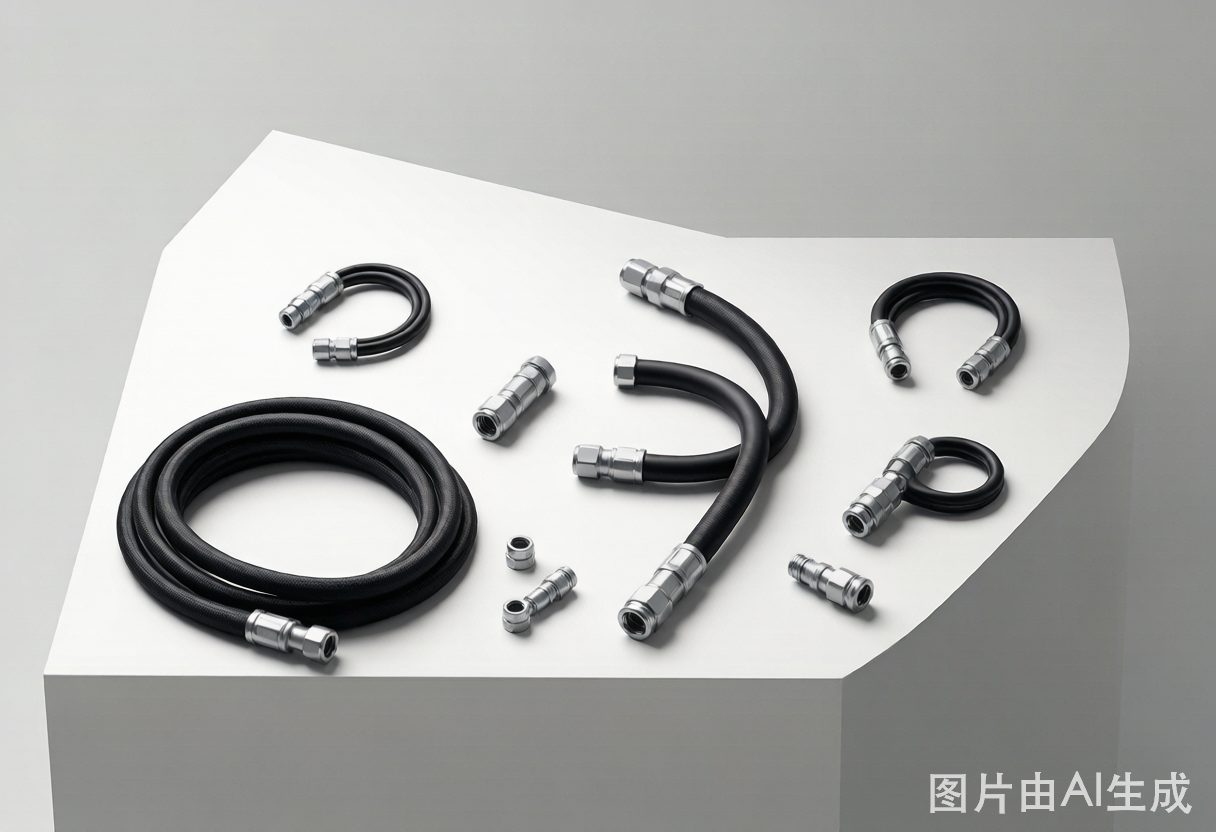
Coupler problems usually surface a second issue: wrong hose length, wrongly clocked ends, or no spare on the shelf. Made-to-drawing hose assemblies remove all three. HCIC supplies hydraulic fittings, hoses and quick couplings and builds assemblies to your drawing or sample — thread standard, length, end fittings and orientation specified together, so a replacement drops in without re-clocking. Joint reliability is covered in fitting leak prevention and failure modes in hydraulic hose burst failure; implement cylinders on the same circuit are covered by agricultural hydraulic cylinders. Dealers consolidate one-off items through the spare-parts program.
- Minimum order quantity: one piece — a single repair is never blocked.
- Payment: T/T, 30% deposit with order and 70% balance before shipment; sample orders are prepaid in full.
- Lead time: custom-built assemblies typically 45–60 days for samples; batch orders of 50+ pcs ship in 30–45 days.
- Response: every inquiry quoted within 48 hours, including the approval drawing cycle.
Assemblies are manufactured to customer drawings and destination-country requirements; CE marking is not applied. Every order ships with a test report and carries an 18-month warranty. HCIC Group (HCIC) was founded in Jinan, Shandong in 1998: three factories and one R&D centre, 250+ employees including 20+ hydraulic engineers, about 95% of production exported.
Frequently asked questions
Why won't my flat-face coupler connect even with the tractor shut off and the implement lowered?
Because lowering the implement only removes the external load, not the oil trapped in a closed circuit. Oil is nearly incompressible and a sealed hose and cylinder cavity holds whatever pressure it was left with. Thermal expansion makes it worse: an implement parked in cool weather and reconnected in warm weather gains pressure from the oil expanding alone.
Is it safe to depress the poppet with a screwdriver or punch to relieve pressure?
No. On a flat-face coupler it will not work, and if you do manage to depress the end on something pointed you are very likely to damage the seal inside the coupler. TractorByNet members recommended cracking a line loose instead, at a JIC connection where the hose enters the tee, because it needs no sealant.
What should I do differently when I park an implement for the season?
Leave the actuator in a position where the cavity is not fully charged with cold oil under load. TractorByNet members reported that leaving grapple jaws slightly open makes reconnecting easier, because the oil then has somewhere to go.
Can HCIC supply replacement couplers and made-to-drawing hose assemblies?
Yes. HCIC supplies hydraulic fittings, hoses and quick couplings and builds hose assemblies to your drawing or sample, with minimum order one piece and a quotation within 48 hours. Send the thread standard, hose length and end fittings, or the assembly as a sample.
Topic source
This article was prompted by a real operator thread, quoted with attribution:
- Thread: Hydraulic quick couplers wont connect - grapple, 3ord function. Help?
- Community: TractorByNet forum · posted by FlyFishn · 2026-03-15
- Equipment: Kubota LX2620 tractor, Land Pride SGC0660 grapple
- Quoted material: the poster's symptoms and his confirmation that the fix worked; community replies on trapped pressure, thermal expansion, alignment and seal-face damage are reported as community experience, not as HCIC test results.