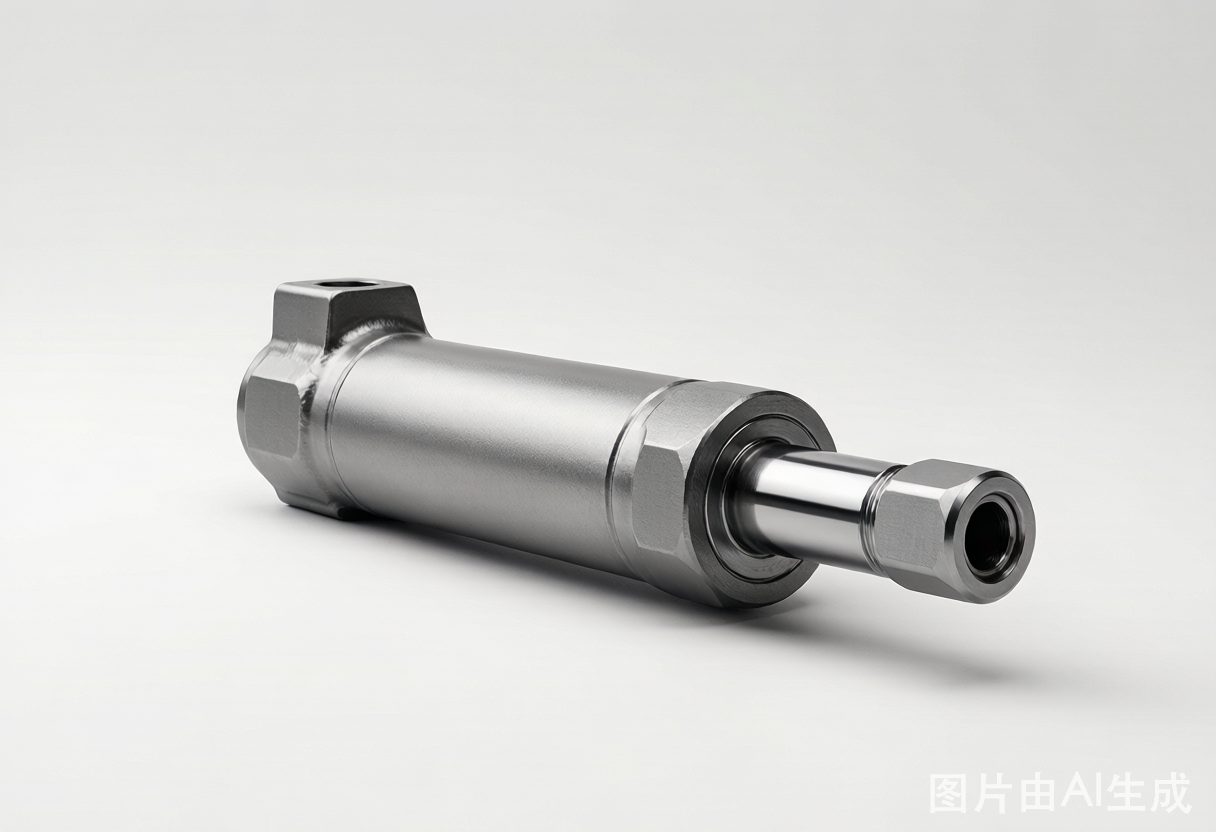
TL;DR: A front loader cylinder replacement is a fitment problem before it is a force problem. The new unit must match the original on retracted pin-to-pin length, stroke, rod diameter, mounting style, pin diameters, port threads and working pressure; bore only decides how much force the same pressure produces. Match all eight numbers and the cylinder bolts in. Miss the retracted length or the port thread and it does not fit at all.
In December 2010 a TractorByNet member opened a thread titled "Having trouble finding cylinder replacement" — no readable part number and a dead loader cylinder. By the sixteenth reply one owner wrote "I gave up on trying to find a replacement and sent my money to Messicks," and a more hands-on member suggested buying a surplus welded cylinder "with the correct bore and stroke," then cutting the ends off and welding on the correct type of end.
That thread is fifteen years old and the problem has not changed; what changed is that a drawing-based manufacturer can rebuild the original from eight measurements and photographs, with no part number needed. This is the list I work from when a loader owner sends us a failed cylinder.
Why bore is the least useful number
Bore sets force: pressure times piston area. A 63 mm bore at 180 bar pushes about 5.7 tonnes; at 200 bar, 6.4. A larger bore lifts slower and pulls more flow from a pump sized for the original; a smaller one will not break a full bucket of wet soil free.
But the machine does not care about bore at installation. Two cylinders with identical bore and stroke can differ in retracted length by 30 mm because one uses longer end fittings. The pin holes are where fitment lives.
Retracted length decides whether it bolts in
The retracted pin-to-pin length is the dimension the loader linkage actually sees. A replacement 20 mm longer prevents the arms from folding fully; 20 mm shorter and the arms sit at the wrong rest geometry and the cylinder bottoms or the bucket cannot level. Measure pin center to pin center with the rod fully in, then again fully extended — the difference is stroke, and the two numbers together constrain every other choice.
Never estimate stroke from the exposed rod alone. On a welded cylinder with a long head fitting, what is visible retracted is not what travels.
The measurement list I ask for
| Measurement | Why it matters | How to take it |
|---|---|---|
| Bore | Force at pressure; must suit pump flow and relief setting | Barrel OD minus wall, or stamped model code |
| Rod diameter | Retract force and column strength under shock | Caliper on the rod, not the packing nut |
| Stroke | Travel range of the arms or bucket | Extended pin-center minus retracted pin-center |
| Retracted length | The fitment dimension; wrong value means it does not bolt in | Pin center to pin center, rod fully in |
| Pin diameters | Pins carry the full loader load in shear | Measure the pin itself at both ends, not the worn hole |
| Mounting style | Cross-tube, clevis or pin-eye must match the brackets | Photo of each end plus clevis inside width |
| Port threads | Wrong thread means adapters or new hoses | Close-up photo of the port face and fitting |
| Working pressure | Cylinder rating must meet the relief setting | Relief valve setting or machine manual |
Record the tractor model and which cylinder it is — lift or tilt, left or right — alongside the numbers. Two cylinders on the same loader are often different units with different strokes.
Port threads: the silent mismatch
The classic failed order is a cylinder with correct bore, stroke and mounting, and ports that the existing hoses cannot thread into. Agricultural loaders mix NPT, BSPP and SAE O-ring boss threads in the same fleet, and they are close enough in appearance to fool anyone at arm's length. A thread identification chart and a photograph of the port face settles it before the order is placed.
Adapters add a restriction and two more leak paths; on a tilt cylinder at 200 bar they weep by the second weekend. Match the thread instead.
Rod diameter and the load the rod actually sees
Loader cylinders work in dirt at full load, with shock every time the bucket strikes ground. The rod is a column: a thin rod on a long stroke bends under side load, and a bent rod eats its seals within weeks. If a previous owner upgraded the rod after a failure, measure what is on the machine now, not what the parts book lists.
On the TractorByNet thread the repair ran deeper than dimensions. "The frame should have stops welded on or the collapsed cyl should bottom out first internally" was the advice after the replacement discussion, and it is correct: a loader that slams its mechanical stops through the cylinder rod end transmits every shock straight into the gland. A replacement survives only if the machine lets the cylinder reach internal cushions before metal meets metal.
Standards help, up to a point
Dimensional standards exist so that a cylinder from one manufacturer can drop into the space another one left. ISO 6020-2 fixes mounting dimensions for compact tie-rod units, and ISO 6022 covers the 250 bar mill-type series; the standard's scope states it exists "as required for interchangeability of these cylinders."
Agricultural loader cylinders are mostly welded, non-catalog units — no standard table hands you their retracted lengths, which is why the measurement list above is the only reliable route and why we build to drawing. If your fleet runs ISO 6022 machines too, the mounting dimensions on our agricultural hydraulic cylinders follow the same interchangeability practice.
What to send when you ask for a quote
A complete enquiry fits in one message: the table filled in, photographs of both mounting ends and both ports, the tractor and loader model, and the relief setting. Where a number is uncertain — a worn pin hole, an unreadable thread — mark it and we confirm it back with a dimensioned drawing before anything is cut.
Drift instead of damage is a different diagnosis with a cheaper cure; the field tests that separate worn piston seals from leaking load-hold valves are in our front loader cylinder drift guide. If the machine needs more lift rather than a repair, the bore arithmetic is in how to size a hydraulic cylinder.
How HCIC builds replacement loader cylinders
HCIC has manufactured agricultural hydraulics since 1998, from three plants and one R&D centre with 20+ engineers, producing 210,000 units a year with 95% exported. A replacement loader cylinder is built to your drawing or your measured original under ISO 6020 / 6022 / 10100 practice, pressure-tested at 3000 psi before it ships, and covered by an 18-month warranty with a full maintenance kit. Samples start at one piece, quotations come back within 48 hours, sample lead time is 45-60 days after quote confirmation and batches of 50 pieces or more run 30-45 days.
The same fitment discipline applies across our group sites: sealing decisions on refuse fleet cylinders are covered at HCIC refuse truck cylinder seals, and small tipper circuits that pair a cylinder with a DC power unit are at trailerhydraulic.com. Loader application notes are collected under front loaders.
Frequently asked questions
Can I replace a loader cylinder with a larger bore?
Only if the pump and valve support the extra flow and the relief setting is checked. A larger bore makes more force at the same pressure but moves slower and demands more oil; it never fixes a fitment problem. Retracted length, stroke, pin diameters and port threads decide whether the cylinder bolts in at all.
How do I measure a loader cylinder if the part number is gone?
Measure pin-to-pin length fully retracted and fully extended, then subtract for stroke. Add rod diameter, pin diameters at both ends, mounting width and style, port thread type and size, and the relief valve setting from the tractor manual. Photograph both ends and the port faces; a supplier can identify thread standards from close-up photos.
Do you need my original cylinder to quote a replacement?
No. A dimensioned sketch, photos of both mounting ends and the ports, plus the measurements above are enough for us to confirm a replacement. If the unit is obsolete or non-standard, we build to your sample or drawing and quote within 48 hours from one sample piece.
What lead time and warranty does HCIC offer on replacement loader cylinders?
Samples ship in 45-60 days after quote confirmation, batches of 50 pieces or more in 30-45 days. Every cylinder is pressure-tested at 3000 PSI before shipment and covered by an 18-month warranty after delivery, with a full maintenance kit supplied.